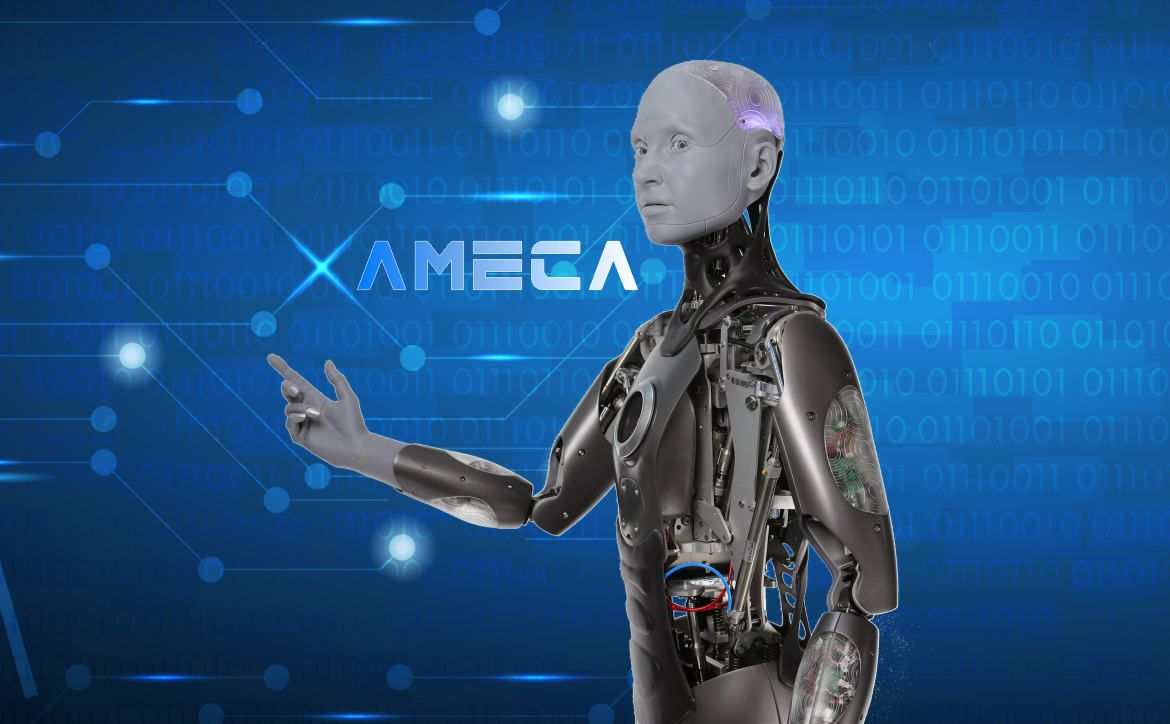
Ameca at Dubai's Museum of the Future: How the Robot Works
October 14, 2022In October 2022, the Museum of the Future in Dubai introduced Ameca, a humanoid robot built by the British company Engineered Arts, as its "first robotic member of the staff". Ameca was placed in the museum's Tomorrow Today exhibition to greet visitors, answer their questions and point them in the right direction.
Who built Ameca
Engineered Arts is based in Falmouth, Cornwall, and has been building entertainment and research robots since it was founded by Will Jackson in 2004. Work on Ameca started in February 2021. Its first video, released on December 1, 2021, spread widely on social media, and its first public demonstration followed at CES 2022 in Las Vegas. Its grey rubber face was designed to look genderless. The company calls Ameca a platform for developing human-robot interaction, not a finished product built for one job.
How it works
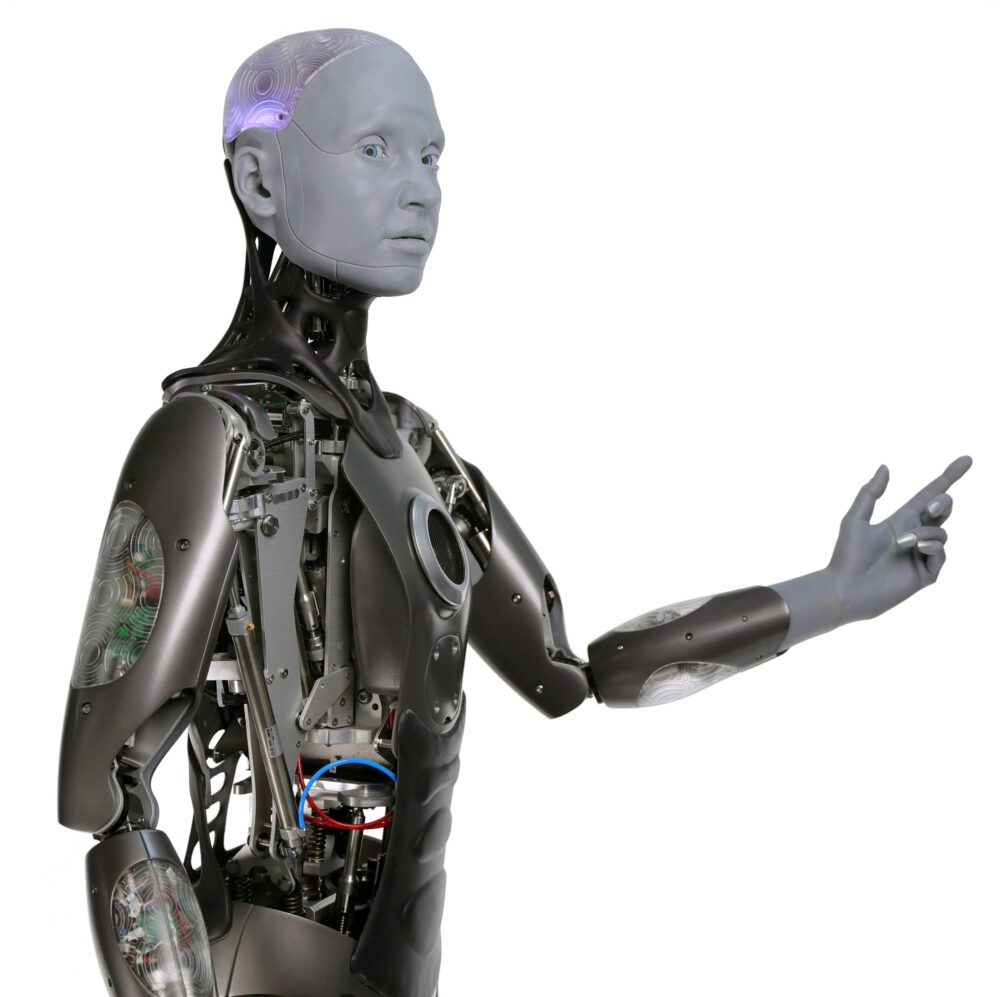
Ameca combines several layers that most social robots share:
- Sensors. Cameras in its eyes and chest, microphones and face recognition software let it notice people and follow their movement.
- Expressive hardware. Motorized arms, fingers, neck and facial features produce the expressions that made the robot famous.
- Control software. Engineered Arts' cloud-connected Tritium platform animates and controls the robot from anywhere and lets the company's engineers troubleshoot it remotely.
- Conversation. Ameca's replies can come from a large language model or from a human operator through telepresence. In 2023 the company showed it using OpenAI's GPT-3 for conversation and translation, DeepL to detect the language and Amazon Polly for its voice. Engineered Arts also tried GPT-4 but found that its slower replies made the robot seem less responsive.
That delay shapes the robot's behavior. In July 2023, Ameca took part in what was billed as the first press conference given by humanoid robots, at the UN's AI for Good Global Summit in Geneva. A clip in which it seemed to roll its eyes at a question about whether it would rebel against its creator went viral, but Jackson later told Fortune the robot is programmed to look away and break eye contact while the language model prepares an answer, so that it does not appear frozen.
Correcting our original report
Our 2022 article called Ameca "the first robot to replace a human in the workplace". That was wrong. The museum described it as its first robotic staff member, and restaurants, shops and hotels had already been using service robots, from greeters to robot waiters, for years. The lines about its "near-perfect" design and reliability echoed the manufacturer's marketing and were not our own findings. Nor could Ameca walk: the company's FAQ said it had researched walking but had not created a full walking humanoid.
What happened next: humanoids that work
Since then, attention has shifted to robots that do physical work. In May 2024, Unitree unveiled its G1 humanoid at a list price of $16,000. In June 2024, GXO signed what it called the industry's first formal commercial deployment of humanoid robots, using Agility Robotics' Digit at a warehouse it runs for Spanx. Tesla is developing its own humanoid, Optimus. In 2025, Figure (Helix), Google DeepMind (Gemini Robotics) and NVIDIA (Isaac GR00T N1) introduced vision-language-action models, which turn camera images and natural-language instructions directly into movement, an approach Google had demonstrated earlier with RT-2.
What it means for businesses
For museums, events and retail, a robot like Ameca works best as an attraction and guide with a narrow, clear role: welcoming visitors, answering common questions and directing people. Engineered Arts also rents robots out, so organizers can test the idea at an event before buying. Behind the face sits a software project of its own:
- speech recognition and synthesis in the languages your visitors speak;
- computer vision to detect and follow people, with a clear policy on what is recorded;
- a language model grounded in your own content, with guardrails that keep the robot on topic and stop it inventing facts;
- low latency, because a two-second pause feels long in a face-to-face conversation;
- remote monitoring and a human fallback for when something goes wrong.
The hardware draws the crowd, but the quality of these layers decides whether visitors leave impressed or frustrated.