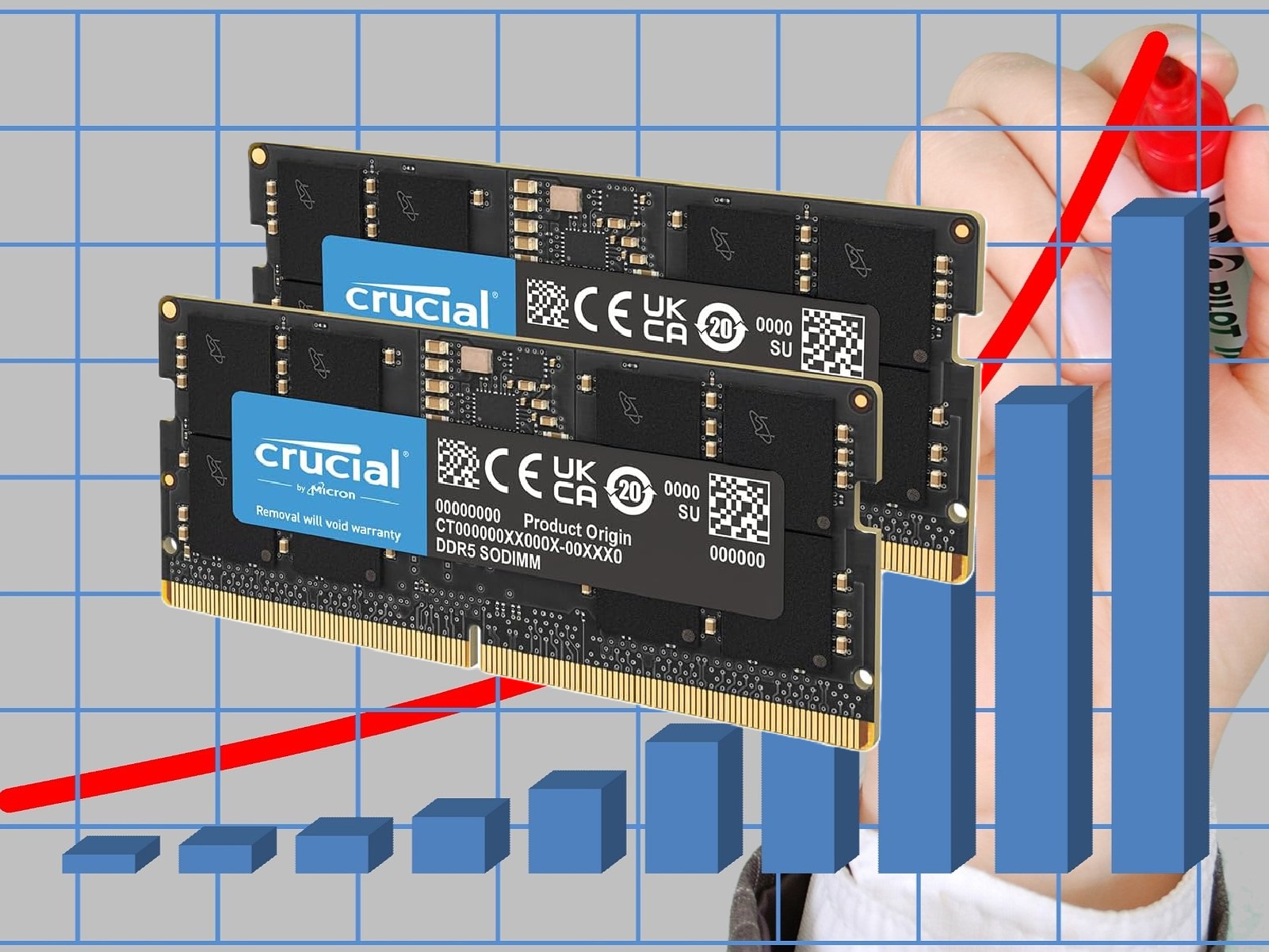
RAM Price Increase: When Will It Be a Good Time to Build a PC?
December 07, 2025Since late 2025, PC builders around the world have watched the price of RAM (random access memory) climb faster than ever before. What used to be one of the most affordable components has become one of the biggest items in the budget. This situation has left many users wondering: why is RAM getting more expensive, and when will it be a good time to build a PC again?
Why Is RAM Getting More Expensive?
The rise in RAM prices is not accidental. Several factors have come together, and one of them matters more than all the others.
Growing Demand for AI and Servers
Artificial intelligence, cloud computing, and data centers require huge amounts of memory, from high-bandwidth memory (HBM) for AI accelerators to server DRAM. These products earn memory makers better margins, so Samsung, SK hynix, and Micron have shifted capacity toward them, leaving less for desktop and laptop memory. In December 2025, Micron even announced its exit from the Crucial consumer business to focus supply on larger customers, and said it would ship Crucial products to retailers only until February 2026.
Limited Production Capacity
Major memory manufacturers cut production in 2023 after a period of oversupply. When AI demand took off, new capacity went to server products first, and new memory factories take years to build.
The End of DDR4
The industry is moving from DDR4 to DDR5, and in 2025 Samsung, SK hynix, and Micron announced plans to phase out DDR4. Instead of making DDR4 cheaper, this sent its prices soaring, and from mid-2025 DDR4 chips even cost more than DDR5 chips on the spot market. DDR5 is now the mainstream standard, but its supply is squeezed by the same shift toward server memory.
Rising Costs of Components and Logistics
Inflation, energy prices, and supply chain issues continue to impact semiconductor manufacturing. These additional costs are naturally passed on to the end user.
How Much Have RAM Prices Risen?
The increases have been dramatic. In early 2026, TrendForce projected that PC DRAM contract prices would more than double in the first quarter compared with the previous quarter, setting a record for a quarterly rise. It then forecast a further 58–63% increase for conventional DRAM in the second quarter and 13–18% in the third, and its September 2026 outlook expects another 10–15% in the fourth quarter.
- DDR4: prices rose sharply as production wound down, so the older standard is no longer the cheap option it used to be.
- DDR5: the biggest increases in absolute terms. According to Tom’s Hardware’s price tracking, a standard 32 GB DDR5 kit that sold for about $100–200 in October 2025 started at around $350 in the US a year later, with popular DDR5-6000 kits at about $430.
How Does This Affect the Cost of Building a PC?
RAM is no longer a “small” expense. In a mid-range or gaming PC, memory can now be one of the most expensive parts of the build. Storage is getting pricier too: TrendForce expects NAND Flash contract prices, which drive SSD costs, to rise 15–20% in the fourth quarter of 2026. This makes the timing of PC assembly more important than ever.
Is Now a Bad Time to Build a PC?
Not necessarily. The answer depends on your purpose and urgency.
Build Now If:
- You need a PC for work (design, programming, video editing)
- Your current system is outdated or broken
- You rely on stable performance for income
- You find discounts or bundle deals
Better to Wait If:
- You’re upgrading purely for gaming with no urgency
- Your current PC is still performing reasonably well
- You want maximum value for money
When Will RAM Prices Go Down?
Not soon. Expectations that prices would stabilize toward the end of 2025 did not come true; instead, prices rose at a record pace in early 2026. The increases have slowed but not stopped, and TrendForce reports that PC makers keep buying aggressively because they expect DRAM supply to remain tight in 2027.
Prices are likely to ease only when some of these conditions are met:
- New production capacity comes online
- Demand from AI data centers cools down
- Inventory levels rise again
Even then, a return to the very low prices of 2022–early 2023 is unlikely any time soon.
Smart Strategies to Save on RAM Right Now
If you must build or upgrade a PC during the current price surge, here are a few practical tips:
- Reuse what you already have. If your current platform uses DDR4 and still meets your needs, upgrading the graphics card or CPU while keeping your existing memory can cost far less than a new DDR5 system. Buying new DDR4 is no longer a bargain.
- Avoid extreme frequencies and RGB hype. High-frequency kits and flashy designs add cost without always giving noticeable real-world performance gains.
- Watch for sales and seasonal discounts. Black Friday and clearance sales can still offer reasonable deals, but good offers are scarce and sell out quickly.
- Consider used or open-box memory. Buy from reputable sellers with a clear return policy and test the modules as soon as they arrive.
- Upgrade in stages. Start with 16 GB and add more later when prices improve, as long as your motherboard has free slots.
Final Verdict
The RAM price increase is driven mainly by AI demand pulling memory supply toward servers, with the end of DDR4 and limited production capacity adding to the pressure. Prices are unlikely to drop dramatically while supply stays tight, which PC makers expect to continue into 2027. If you need a PC now, build it and save where you can; if you can wait, watch prices rather than the calendar.