Neuralink's Human Trials: From the 2022 Hiring Push to 2026
January 31, 2022In January 2022, Neuralink, the brain-computer interface (BCI) company co-founded by Elon Musk, advertised for a clinical trial director based in Fremont, California. The director would build the team running its clinical research, keep it within the regulations and work with Neuralink's "first Clinical Trial participants". Until then the implant had been tested only in animals, including a monkey that played a video game, and Musk had said he hoped to implant the first humans in 2022.
From rejection to approval
The 2022 timeline did not hold. In early 2022, the US Food and Drug Administration rejected Neuralink's application to start human trials. Reuters reported in March 2023 that the FDA's concerns included the implant's lithium battery, the risk that its thin wires could migrate to other parts of the brain, and whether the device could be removed without damaging brain tissue. The FDA approved a first-in-human study in May 2023, and recruitment opened that September.
The PRIME study
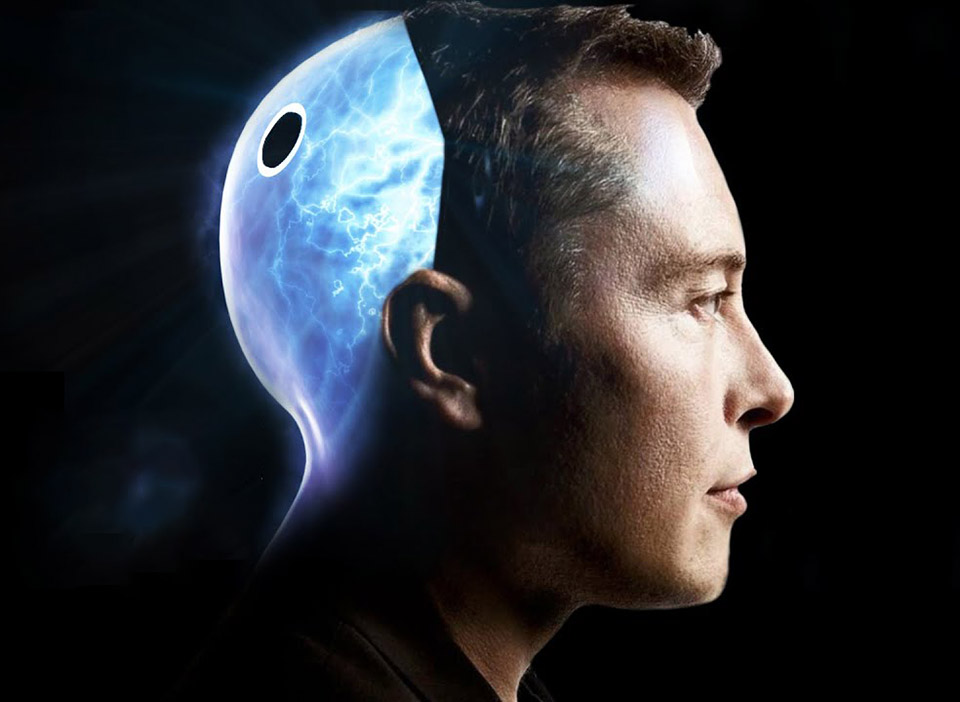
The PRIME study (Precise Robotically Implanted Brain-Computer Interface) enrolls people with paralysis caused by a cervical spinal cord injury or ALS. A surgical robot inserts flexible threads carrying electrodes into the region of the brain that controls movement intention. The coin-sized implant, called Telepathy, sends the recorded activity wirelessly to software that turns intended movements into cursor control.
The first implant was performed at Barrow Neurological Institute in Phoenix in late January 2024. The patient, Noland Arbaugh, who became tetraplegic after a diving accident, was soon using it to play chess and video games. Within weeks, a number of the threads retracted from his brain, reducing the number of working electrodes. Neuralink compensated in software, making its recording algorithm more sensitive and improving how signals become cursor movements, and his performance ended up better than at the start. For the second participant, in August 2024, the surgical approach was changed to reduce brain motion, and no thread retraction was reported.
Where things stand in 2026
- More participants and countries. In January 2026, Neuralink announced 21 participants, up from three a year earlier. Health Canada approved the CAN-PRIME study in November 2024, and the first Canadian surgeries took place in Toronto in 2025. In October 2025, University College London announced that the first UK patient had controlled a computer by thought within hours of surgery.
- Robotic arm control. The CONVOY study, launched in November 2024, tests whether participants can use the implant to control an assistive robotic arm.
- New indications. The FDA has given Breakthrough Device designation, which speeds up review but is not an approval, to Blindsight, a device meant to restore limited vision by stimulating the visual cortex directly (September 2024), and to Neuralink's work on restoring communication for people with severe speech impairment (May 2025). By January 2026 it had launched VOICE, a speech-restoration trial.
- Scale. At the end of 2025, Musk said Neuralink would start high-volume production of its devices in 2026 and move to an almost entirely automated surgical procedure.
The software is half the product
A BCI like this is as much a machine-learning system as a medical device. Decoders trained on each user's data turn neural activity into cursor movement and clicks and must adapt as signals change. Neuralink measures performance in bits per second: how quickly and accurately a user selects targets on a screen.
Neuralink is not alone. Synchron's Stentrode is placed through a blood vessel instead of open brain surgery, and in August 2025 the company showed a participant controlling an iPad through Apple's new BCI Human Interface Device protocol. Precision Neuroscience's thin-film Layer 7 array received FDA 510(k) clearance in April 2025 for implantation of up to 30 days. Blackrock Neurotech's Utah array has long been used in academic research.
What the implant is, and is not, for
Our original 2022 article said the device would control hormones, fight depression and "outbursts of anger". None of this is part of Neuralink's trials. So far the implant has been tested to let people with severe paralysis control computers, phones and, in CONVOY, a robotic arm with their thoughts. Other groups have studied brain stimulation for severe depression, but that is a different kind of device and research program.